

Whoever plants an olive tree agrees to work for a time they may never see. Whoever harvests its fruit receives something from hands they may never have known.
In that passage between generations lies one of the deepest reasons I work on the Mediterranean diet: the responsibility to leave someone else the possibility of carrying on.
This is where our week in New York begins. With the olive trees and Palestinian farmers whose story is told in Land of Canaan. With the land, the courage it takes to care for it, and the peace that makes it possible to imagine another harvest.
We chose to open Convivium with Seeds of Sovereignty: Food, Land & Heritage because we wanted to bring these questions into New York Climate Week and the conversations surrounding the United Nations General Assembly. We are here to connect the experience of communities with the decisions that shape their future, and to find people willing to work on those connections with us.
We bring the world we know: food, education, relationships, the time it takes to listen.
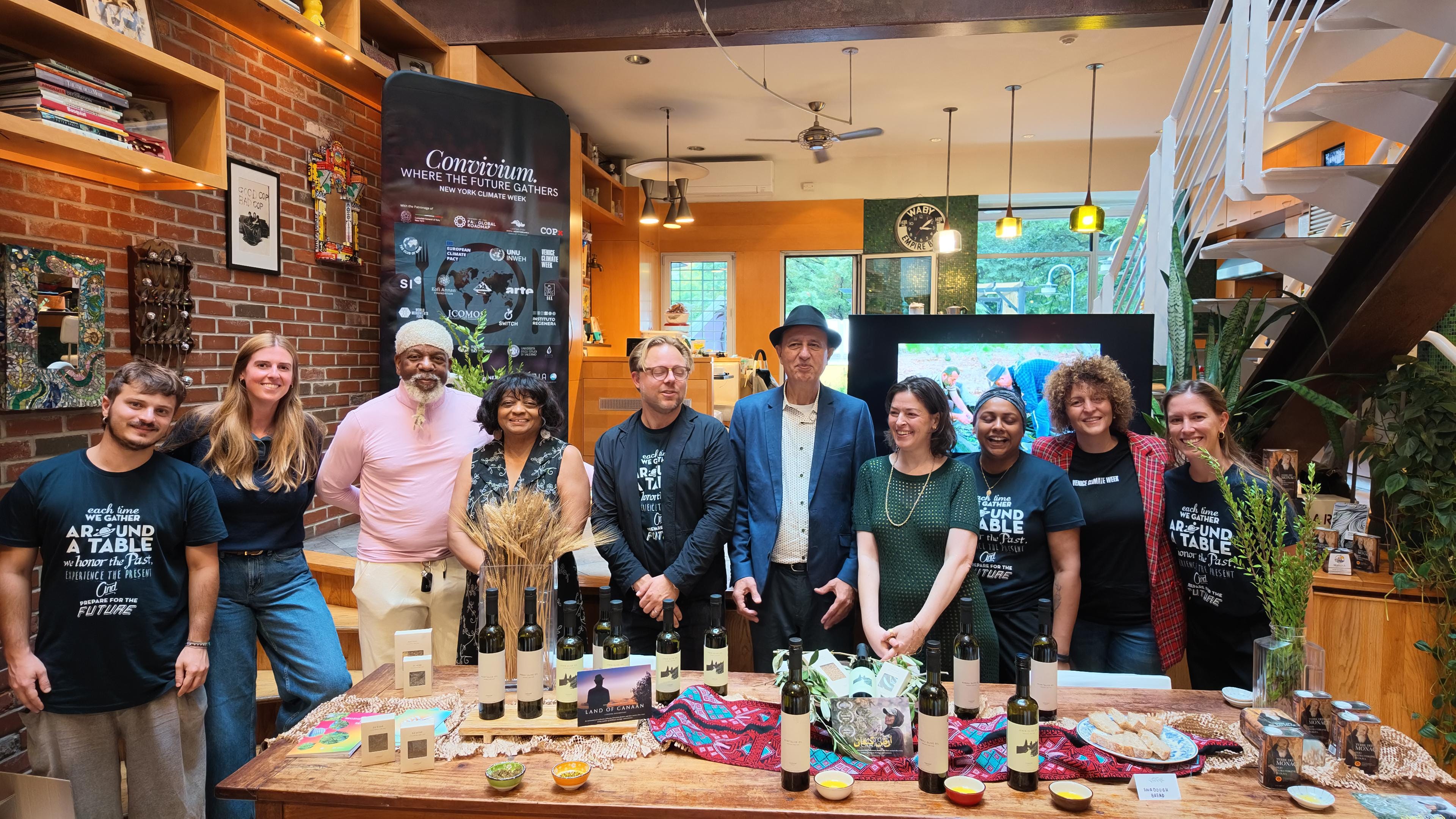
And we are not alone. Future Food Institute, the Municipality of Pollica and the Centro Studi Dieta Mediterranea “Angelo Vassallo”, our Mediterranean Diet Study Center, are part of this work alongside COPx, Friends of the FAO Global Roadmap, European Climate Pact Ambassadors and members of the Club of Rome. Around us is a wider family of partner organizations, friends and companions in this work, bringing different experiences and responsibilities to the same conversation.
Convivium begins around a table. In the Mediterranean tradition of the convivio, welcoming someone means making room for them, sharing what we have and allowing their story to enter our conversation. Even when it unsettles us. Even when it asks us to reconsider something we thought we understood.
For me, this is where food, diplomacy and advocacy meet. The person across the table may understand the same issue through an entirely different life. A shared meal gives us time to discover that difference. What we do with it is our responsibility.
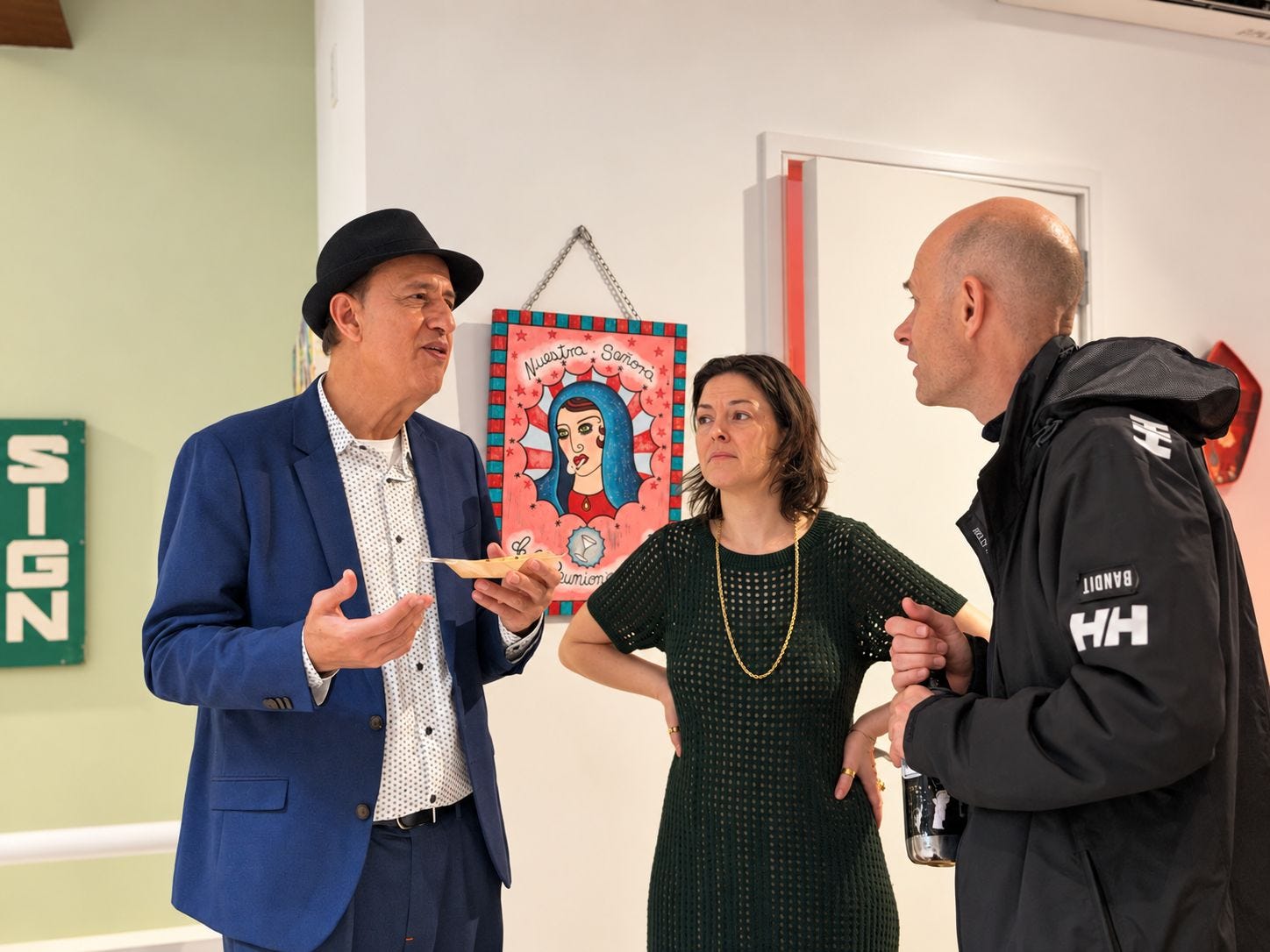
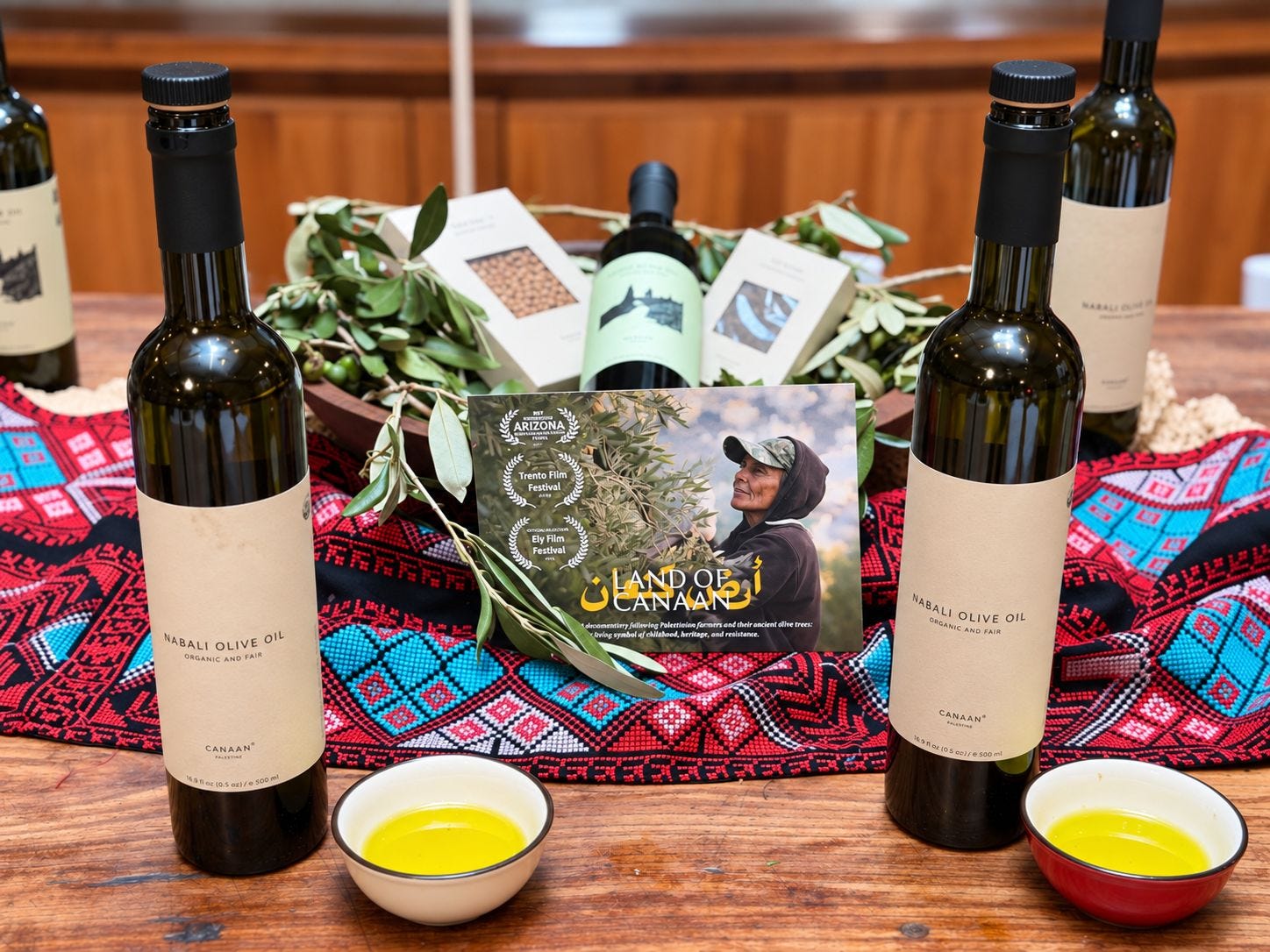
Land of Canaan, Maggie Lemere’s documentary, follows Nasser Abufarha and his work with farmers in the occupied West Bank. Its official synopsis describes the building of a fair-trade network and the defense of an ecosystem that holds ecological knowledge developed and passed down over thousands of years.
This is the heritage I want us to learn to see alongside the trees.
Knowledge of soil and water, of the relationships between crops. The ability to observe, adjust, recognize a change and seek a response. Each generation receives something and puts it to the test. Tradition continues because people take on the work of sustaining it.
When that continuity breaks, we lose possibilities for the future too. Agricultural knowledge can disappear when those who hold it can no longer earn a living from their work, when young people cannot learn it, or when reaching a field becomes impossible.
The courage of Palestinian olive farmers must be understood within these material conditions. In its September humanitarian report, OCHA documents Israeli settler attacks affecting Palestinian agriculture and water resources, including mature olive trees uprooted and destroyed in Silwad. Continuing to cultivate under such conditions means defending a livelihood and the possibility of remaining on one’s land.
I do not want our admiration for that courage to make us accustomed to what these farmers are forced to endure.
No one should have to be heroic to harvest olives.
The desire for peace needs an answer in the protection of people, access to land and water, and the freedom to imagine the next harvest. Otherwise, we risk celebrating the olive branch while overlooking the life of the person tending the tree.
Economic relationships carry responsibilities too. Canaan’s network connects agricultural work with fair trade. Its value should be judged by its ability to support livelihoods and the continuing care of the land. Prices that sustain producers, reliable commercial relationships and opportunities for younger generations all matter to the survival of a heritage. Recognition alone cannot keep it alive.
From Pollica, in southern Italy, we brought olive oil from Peppe Cilento and our cooperative; alici di menaica, anchovies from Vittorio and Donatella; and grains from Edmondo, Luigia and Simona Soffritti.
These ingredients carry people’s names. That matters to me. Naming the people behind our food keeps the conversation close to the work that makes it possible. It also asks something of us: if we value that work at home, how do we recognize and support it elsewhere?
Above all, we bring an understanding shaped by our work with the Municipality of Pollica, the Study Center and Paideia Campus. Caring for the Mediterranean diet means keeping education, research, farming, fishing and community life connected. It means asking whether a young person can choose to stay, learn a profession, renew it through new knowledge and build a dignified life around it.
The conditions in the Cilento and in the Palestinian territories are profoundly different. Respecting that difference makes the relationship more serious. Recognizing those who care for our land commits us to listening to those who care for theirs elsewhere.
This plural Mediterranean is with us in New York. Centuries of exchange, different languages and cultures, an inheritance that lives through the work and choices of communities. Safeguarding it also requires the courage to confront the challenges we will pass on to those who come after us.
This year, on Nov 16, 2026, we will mark the first International Day of the Mediterranean Diet, established by the United Nations General Assembly, with FAO taking the lead in supporting its celebration.
I want us to treat that recognition as a reason to ask more of ourselves.
FAO points to the value of diets rooted in places, local economies and environmental resources, while warning that this heritage is eroding. The international day creates an opportunity to bring producers, educators and public authorities into a conversation about the conditions that allow these food cultures to keep nourishing us.
I keep returning to this question in my writing: what does it take to protect the conditions that make the Mediterranean diet possible? Here in New York, it becomes a question about the purpose of our presence. Who needs to be heard? Which relationships could support their work? What can we bring back to our communities when the meetings are over?
Around food, we can bring together experiences that rarely share a table. We can discuss decisions and responsibilities starting from a field, a family or a school. The value of the relationships we build this week will be measured in what follows: knowledge people can use, opportunities they can act on, commitments we are prepared to pursue.
A table for peace begins with listening. It asks us to leave with one more responsibility.
For those who tend an olive tree, my wish is that they may harvest its fruit with their children. And for those children, that they may have the freedom to choose to carry on.
That possibility, so tangible and so fragile, is what I want our work this week to serve.